
Request an Appointment or Give us a call
Achilles Tendonitis Treatment in Marylebone, London
Specialist Care for Achilles Pain, Tendon Damage and Lower-Leg Mobility
Achilles tendon pain can make walking, running, climbing stairs, and everyday movement uncomfortable. Achilles tendonitis treatment in Marylebone, London can help address persistent pain, stiffness, swelling, and tendon problems while supporting a safe return to normal activities. Early assessment is important because ongoing Achilles tendon symptoms can sometimes worsen without appropriate treatment.
Dr. Rohit Madhav is a Consultant Orthopaedic Surgeon specialising in foot and ankle conditions, including Achilles tendon disorders and sports-related injuries. He provides a detailed assessment to determine the underlying cause of your symptoms and develops an individualised treatment plan based on the severity of tendon damage, your activity level, and your recovery goals.
What is Achilles Tendonitis?
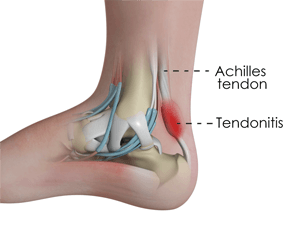
Inflammation of the Achilles tendon is known as Achilles tendonitis or tendinitis.
The Achilles tendon is a tough band of fibrous tissue that runs down the back of your lower leg and connects your calf muscle to your heel bone. The tendon is used when you walk, climb, jump, run and stand on your tip toes.
Causes of Achilles Tendonitis
Achilles tendonitis occurs as a result of repetitive stress to the tendon. The stress may be due to:
- Overuse of the tendon
- Degeneration of the tendon
- Intense physical activity
- A sudden increase in activity
- Tight calf muscles
- Bone spurs or extra bone growth
- Rheumatoid arthritis and/or infection
Types of Achilles Tendonitis
Based on which part of the tendon is affected, Achilles tendonitis can be differentiated into:
- Insertional Achilles tendonitis: In this type, the lower portion of the tendon, where it attaches (inserts) to the heel bone is inflamed due to bone spurs.
- Non-insertional Achilles tendonitis: In this type, the middle portion of the tendon breaks down with tiny tears (degenerate), swells, and thickens. This is more commonly seen in younger and active people.
Signs and Symptoms of Achilles Tendonitis
Some of the signs and symptoms of Achilles tendonitis include:
- Stiffness and pain along the Achilles tendon.
- Swelling and thickening of the tendon.
- Swelling or discomfort in the back of your heel.
- Pain in the back of your heel that worsens with activity.
- Tight and stiff calf muscle.
- The skin on the heel is warm to touch.
- Limited motion when you flex the foot.
What if Achilles Tendonitis is Left Untreated?
If Achilles tendonitis is left untreated, it may cause:
- Severe pain
- Trouble walking or exercising
- Deformation of the tendon or heel bone
- Total tear or rupture of the Achilles tendon
Diagnosis of Achilles Tendonitis
To begin with, your doctor will physically examine your calf, heel, foot and ankle to look for symptoms associated with Achilles tendonitis and ask you some questions on how you got injured. Your doctor will also palpate the affected area to elucidate the exact location of pain or discomfort.
Subsequently, imaging tests may be ordered to confirm the diagnosis of Achilles tendonitis. These tests include:
- X-rays: For images of leg bones and foot (to check for bone calcification)
- MRI scans: To detect tendon ruptures or tissue degeneration
- Ultrasounds: To check for tendon damage or inflammation
Treatment of Achilles Tendonitis
Treatment for Achilles tendonitis ranges from home remedies to nonoperative therapies to surgery.
As a home remedy, you may be advised to use RICE protocol: Rest, Ice, Compression (with bandage) and Elevation, which is usually effective in treating Achilles tendonitis.
Afterwards, you may be given non-steroidal anti-inflammatory drugs (NSAIDs) or steroid or PRP injections as a nonoperative therapy. You may also be told to wear a brace and undergo physical therapy involving certain exercises.
If the pain does not improve after 6 months of nonsurgical treatment, surgery may be considered to repair your Achilles tendon. The specific type of surgery depends on the amount of damage to the tendon and the location of the tendonitis.
In an “open repair” type surgery, your surgeon:
- Makes a surgical cut above the heel bone to open your leg.
- Stitches the 2 sides of the ruptured tendon back together.
- Closes the incision to complete the surgery.
In another type of surgery, your surgeon:
- Makes a surgical cut to open the ruptured area of the leg.
- Passes needles with sutures through the tendon and the skin.
- Then ties the sutures together to complete the surgery.
Other surgical methods include:
- Debridement and repair: If the tendon has less than 50% damage, the damaged part is removed, and the remaining healthy part is repaired with sutures or stitches.
- Debridement with tendon transfer: In cases where the tendon has more than 50% damage and the remaining portion is not strong enough to function alone, an Achilles tendon transfer is performed.
- Gastrocnemius recession: This is the surgical lengthening of the calf muscles. The procedure is performed for people who have difficulty in flexing the foot, despite consistent stretching.
Though rare, complications such as infection, slow wound healing, damage to nerves and soft tissues, and bleeding may occur after any of the above surgeries. It may take you anywhere from a few weeks to a few months to recover fully.
Why Choose Dr. Rohit Madhav for Achilles Tendonitis in Marylebone, London?
Choosing an experienced foot and ankle specialist is important when you have persistent Achilles tendon pain or suspected tendon damage. Dr. Rohit Madhav is a Consultant Orthopaedic and Trauma Surgeon with specialist expertise in foot and ankle conditions and sports injuries.
Dr. Madhav takes a personalised approach to Achilles tendon problems, beginning with a careful assessment of your symptoms, medical history, physical examination, and, when required, diagnostic imaging. Treatment recommendations are based on the location and severity of the tendon problem, your lifestyle, activity level, and individual goals.
Most Achilles tendon problems can initially be managed without surgery. Where symptoms persist despite appropriate conservative treatment or where there is significant tendon damage, Dr. Madhav can discuss whether a surgical procedure may be appropriate.
Why Patients in London Choose Dr. Rohit Madhav
- Specialist expertise in foot and ankle surgery
- Experience treating Achilles tendon disorders and sports injuries
- Thorough assessment of tendon pain, stiffness, and dysfunction
- Individualised treatment plans based on each patient's needs
- Access to appropriate diagnostic imaging when required
- Consideration of non-surgical and surgical treatment options
- Personalised postoperative and rehabilitation guidance
- Convenient specialist foot and ankle care in Marylebone, Central London
From diagnosis through treatment and recovery, Dr. Madhav provides clear guidance to help patients understand their condition and make informed decisions about their care.
Schedule a consultation in Marylebone, London, to discuss your Achilles tendon symptoms and treatment options.
Achilles Tendonitis FAQs
What causes Achilles tendonitis?
Achilles tendon problems can develop due to repetitive stress or overuse of the tendon. Risk factors may include a sudden increase in physical activity, intensive exercise, tight calf muscles, tendon degeneration, certain foot and ankle problems, and some underlying medical conditions. An assessment can help identify factors contributing to your symptoms.
Can Achilles tendonitis heal without surgery?
Many cases of Achilles tendonitis can be managed without surgery. Treatment may include activity modification, physiotherapy, targeted exercises, appropriate footwear or support, and medication where suitable. The recommended approach depends on the type and severity of the tendon problem.
When should I see a specialist for Achilles tendon pain?
You should consider specialist assessment if Achilles pain persists despite rest and appropriate self-care, repeatedly returns, limits your ability to walk or exercise, or is accompanied by significant swelling or weakness. Sudden severe pain or a popping sensation in the Achilles tendon may indicate a rupture and requires prompt medical assessment.
How is Achilles tendonitis diagnosed?
Diagnosis usually begins with a medical history and physical examination of the foot, ankle, heel, and calf. Depending on the symptoms and clinical findings, imaging such as ultrasound, X-rays, or MRI may be recommended to assess the tendon and identify associated problems.
Does Achilles tendonitis require surgery?
Surgery is not usually the first treatment for Achilles tendonitis. It may be considered in selected patients who continue to experience significant symptoms despite appropriate non-surgical treatment or who have substantial tendon damage. The type of surgery depends on the location and extent of the tendon problem.
How long does it take to recover from Achilles tendonitis?
Recovery varies considerably depending on the severity and type of Achilles tendon problem and the treatment required. Mild cases may improve with appropriate conservative care, while significant tendon injuries or surgery can require a longer rehabilitation period. Your recovery programme will be tailored to your condition and activity goals.
Expert Achilles Tendonitis Treatment in Marylebone, London
Persistent Achilles tendon pain should not be ignored, particularly if it is affecting your ability to walk, exercise, work, or participate in sport. Dr. Rohit Madhav provides specialist assessment and personalised treatment for Achilles tendonitis and other foot and ankle conditions in Marylebone, London.
Whether your symptoms can be managed with non-surgical treatment or require further intervention, Dr. Madhav can assess your condition and explain the available options based on your individual needs.
Contact Dr. Rohit Madhav's Marylebone clinic today to schedule a consultation and take the next step towards managing your Achilles tendon pain and restoring comfortable movement.