

Request an Appointment or Give us a call
Total Ankle Replacement in Marylebone, London
Specialist Ankle Replacement Surgery for Pain Relief and Improved Mobility
Severe ankle arthritis can cause persistent pain, stiffness, swelling, and reduced mobility, making everyday activities such as walking, exercising, and climbing stairs increasingly difficult. When non-surgical treatments no longer provide sufficient relief, total ankle replacement in Marylebone, London may be considered to relieve pain while preserving movement in the ankle joint.
Dr. Rohit Madhav is a Consultant Orthopaedic Surgeon specialising in foot and ankle conditions, including advanced surgical treatment for ankle arthritis. Total ankle replacement, also known as total ankle arthroplasty, involves replacing damaged portions of the ankle joint with an artificial implant designed to restore joint function and reduce painful bone-on-bone contact.
What is Total Ankle Replacement?
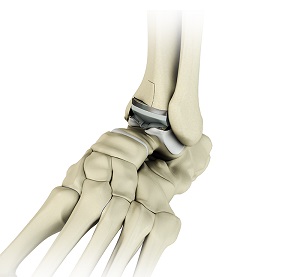
Total ankle replacement, also known as total ankle arthroplasty, is a surgical procedure designed to relieve pain and restore function in patients with severe ankle arthritis or damage. It involves replacing the diseased or damaged ankle joint with an artificial implant (prosthesis). The procedure is typically recommended when conservative treatments, such as medications and physical therapy have failed to alleviate symptoms.
The ankle joint, or tibiotalar joint, connects the tibia (shinbone) to the talus (a bone in the foot). In total ankle replacement, the surgeon removes the damaged portions of the tibia and talus and replaces them with a prosthesis made of metal and plastic components. This restores smooth movement and reduces pain caused by bone-on-bone friction.
Indications for Total Ankle Replacement
Total ankle replacement is typically considered for patients with:
- End-stage arthritis (osteoarthritis, rheumatoid arthritis, or post-traumatic arthritis).
- Persistent pain and loss of function despite non-surgical treatments.
- Adequate bone quality and alignment to support the prosthesis.
It is often recommended for individuals seeking to maintain joint motion as opposed to an alternative procedure like ankle fusion (arthrodesis), which eliminates movement in the joint.
Procedure for Total Ankle Replacement
In general, the total ankle replacement procedure will involve the following steps:
- The patient is placed under general or regional anaesthesia.
- An incision is made over the front or side of the ankle.
- Soft tissues, including skin, muscles, and tendons, are carefully retracted to expose the ankle joint.
- The surgeon removes the damaged cartilage and bone from the tibia (shinbone) and talus (ankle bone).
- Metal prosthetic components are secured to the prepared surfaces of the tibia and talus.
- A high-density polyethene spacer is inserted between the metal components to mimic natural joint movement and reduce friction.
- The surgeon checks the alignment and range of motion of the implant to ensure it moves smoothly and is properly positioned.
- The incision is closed using sutures or staples, and a sterile dressing is applied.
Post-Procedure Care and Recovery
After total ankle replacement surgery, the ankle is typically immobilised with a cast or splint to protect the joint and allow initial healing. Weight-bearing is typically restricted for 4–6 weeks, depending on the surgeon's recommendations. Medications are prescribed to manage postoperative pain and inflammation. Physical therapy begins after the initial healing phase to restore motion, strength, and balance. A gradual return to weight-bearing activities is advised. Regular follow-up appointments and imaging are scheduled to help monitor the implant's positioning and healing progress. Full recovery typically takes 6–12 months.
Risks and Complications
As with any surgery, risks and potential complications may occur, such as:
- Infection
- Bleeding
- Implant loosening or wear
- Nerve or blood vessel damage
- Persistent pain or instability
- Blood clots or deep vein thrombosis (DVT)
- Anaesthesia-related risks
Why Choose Dr. Rohit Madhav for Total Ankle Replacement in Marylebone, London?
Choosing an experienced foot and ankle specialist is important when considering total ankle replacement. Dr. Rohit Madhav is a Consultant Orthopaedic and Trauma Surgeon with specialist expertise in foot and ankle surgery and the management of complex ankle conditions.
Dr. Madhav takes a personalised approach to ankle arthritis, carefully evaluating the severity of joint damage and considering your symptoms, mobility, lifestyle, and treatment goals. Not every patient with ankle arthritis is suitable for total ankle replacement, so a detailed assessment is essential before deciding on the most appropriate treatment.
Why Patients in London Choose Dr. Rohit Madhav
- Specialist expertise in foot and ankle surgery
- Experience treating complex ankle conditions and arthritis
- Individualised assessment and treatment recommendations
- Careful evaluation of ankle alignment and joint condition
- Personalised discussion of ankle replacement and alternative treatments
- Modern surgical techniques and evidence-based treatment planning
- Comprehensive postoperative and rehabilitation guidance
- Specialist foot and ankle care conveniently located in Marylebone, Central London
From your initial consultation through postoperative recovery, Dr. Madhav provides clear information about your treatment options, expected recovery, and rehabilitation requirements.
Schedule a consultation in Marylebone, London, to find out whether total ankle replacement may be suitable for you.
Total Ankle Replacement FAQs
Who may be suitable for total ankle replacement?
Total ankle replacement may be considered for patients with advanced ankle arthritis who experience persistent pain and functional limitations despite appropriate non-surgical treatment. Suitability depends on factors such as the condition of the ankle joint, alignment, bone quality, activity level, and overall health.
What is the difference between ankle replacement and ankle fusion?
Both procedures can be used to treat severe ankle arthritis, but they work differently. Total ankle replacement replaces the damaged joint surfaces with an implant and aims to preserve ankle movement. Ankle fusion, also called arthrodesis, joins the bones of the ankle together to eliminate movement at the affected joint. Your surgeon can explain which approach is more appropriate for your individual condition.
How long does recovery take after total ankle replacement?
Recovery varies between patients and depends on the surgical technique, healing, and rehabilitation programme. A period of restricted weight-bearing is often required initially, followed by a gradual progression of movement and activity. Physiotherapy may be recommended to improve mobility, strength, balance, and function. Your surgeon will provide an individual recovery plan.
How long does a total ankle replacement implant last?
The longevity of an ankle replacement varies depending on factors such as implant type, activity level, alignment, bone quality, and individual healing. Regular follow-up appointments can help monitor the condition and position of the implant over time.
What are the potential risks of total ankle replacement?
Total ankle replacement is a major surgical procedure and carries potential risks. These may include infection, bleeding, nerve or blood vessel injury, blood clots, wound-healing problems, persistent pain or instability, implant loosening or wear, and the possibility of further surgery. Dr. Madhav will discuss the potential risks and benefits with you before treatment.
Specialist Total Ankle Replacement in Marylebone, London
Living with advanced ankle arthritis can make walking and everyday activities increasingly difficult. If pain, stiffness, and reduced mobility are affecting your quality of life despite non-surgical treatment, Dr. Rohit Madhav can assess your ankle and discuss the most appropriate treatment options.
As a Consultant Orthopaedic Surgeon specialising in foot and ankle surgery in Marylebone, London, Dr. Madhav provides personalised care for patients with complex ankle conditions, including severe ankle arthritis that may require joint replacement.
Contact Dr. Rohit Madhav's Marylebone clinic today to arrange a consultation and explore whether total ankle replacement or another treatment option is right for you.